Although thoroughly checking our container before gearing up for each jump is of primary and fundamental importance to minimize safety risks, it is crucial to remember that there are also other elements that play a significant role in our safety and performance during the jump. These should be inspected with the same care as our parachute, before gearing up and during every 3×3 check.
These elements are commonly known as “accessories”, and they are the items, aside from our parachute, that ensure we return to the ground without a scratch.
The basic accessories every skydiver should have to maximize the safety of their jumps are: jumpsuit, helmet, audible altimeter, goggles, visual altimeter, proper footwear, and a radio (if required).
Below, we’ll talk in detail about each of these items in the exact order in which we recommend gearing up right before putting on your parachute.
Jumpsuit
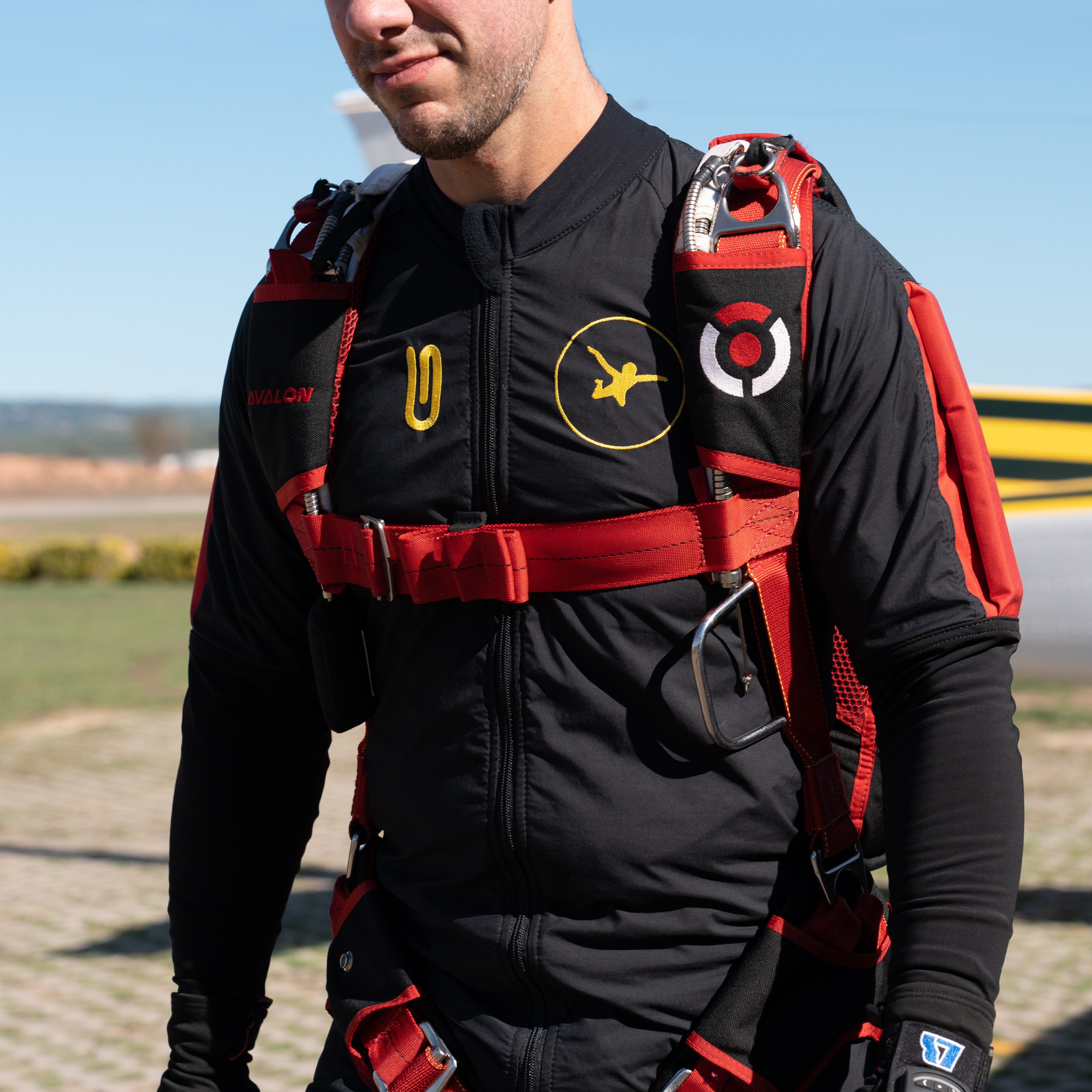
The jumpsuit serves three important safety functions throughout the jump. First, it acts as a protective layer for the skin against surfaces that can cause abrasions upon landing, especially in “off-dropzone” landings where you may encounter dense vegetation, tree branches, or even fences with wires. Second, it is recommended to use a jumpsuit instead of regular clothing, as its uniform design prevents entanglements with the handles for main or emergency deployment, preventing pieces of fabric from interfering when you need to activate them. Lastly, for AFF students, the jumpsuit has four grip points for the instructor to assist or correct the student’s position if necessary.
Additionally, it helps regulate our freefall speed and provides protection against the cold and UV rays.
There are different types of jumpsuits depending on the discipline being practiced. Although it’s recommended to wear one, it is not mandatory once you have passed the student phase (USPA A license).
It’s important to ensure that your jumpsuit is comfortable, made of durable material, and allows full mobility in the various postures you will adopt during the jump.
Helmet
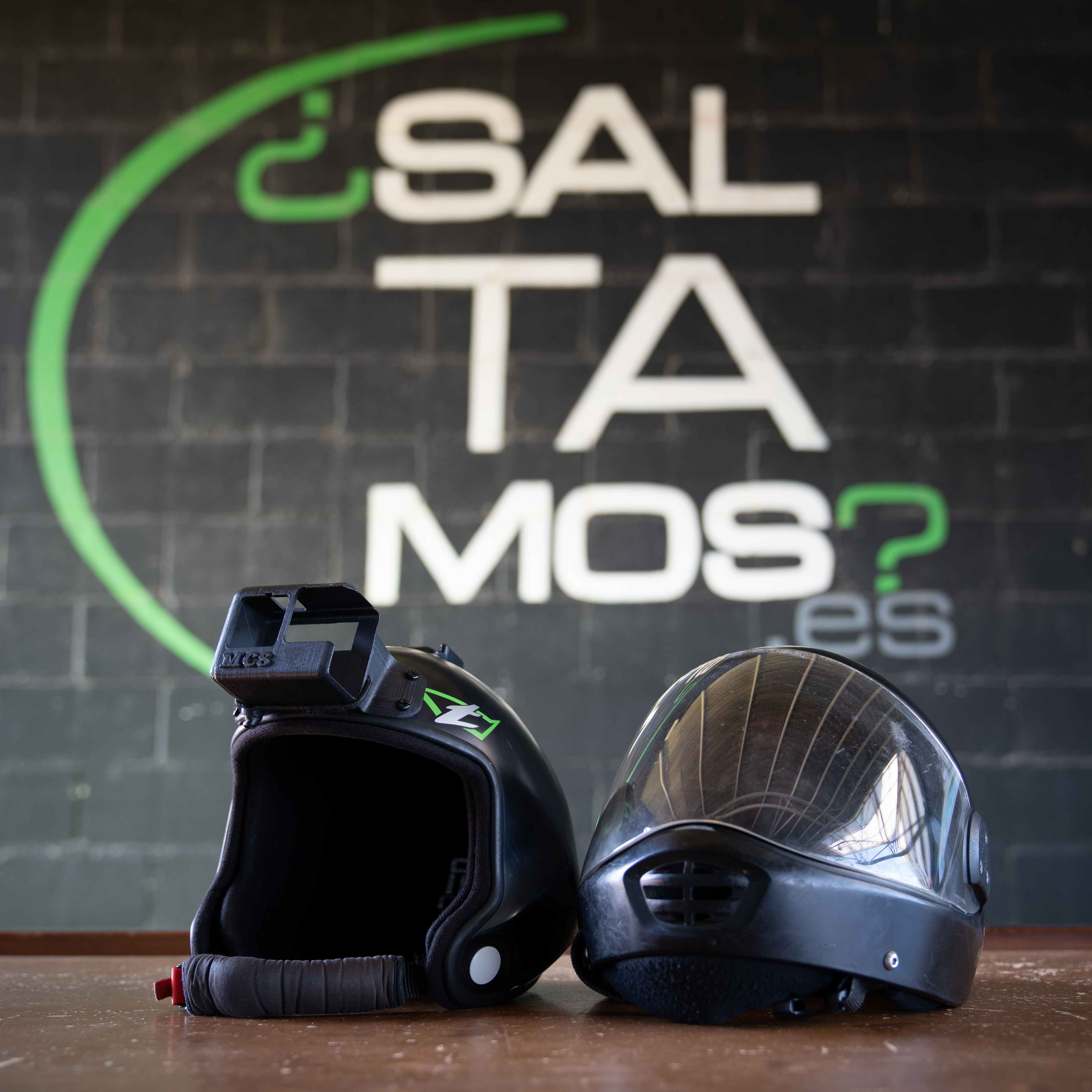
The primary function of the helmet is to protect your head from impacts that may occur at various points during the jump. There are two types of solid helmets: open and full-face.
Although full-face helmets are more recommended because they protect your face, open helmets are used in situations where recognizing the facial expressions of jumpers is important, such as in student jumps.
It’s crucial to ensure the helmet is your correct size and fastens securely to prevent it from flying off during freefall.
Visual Altimeter
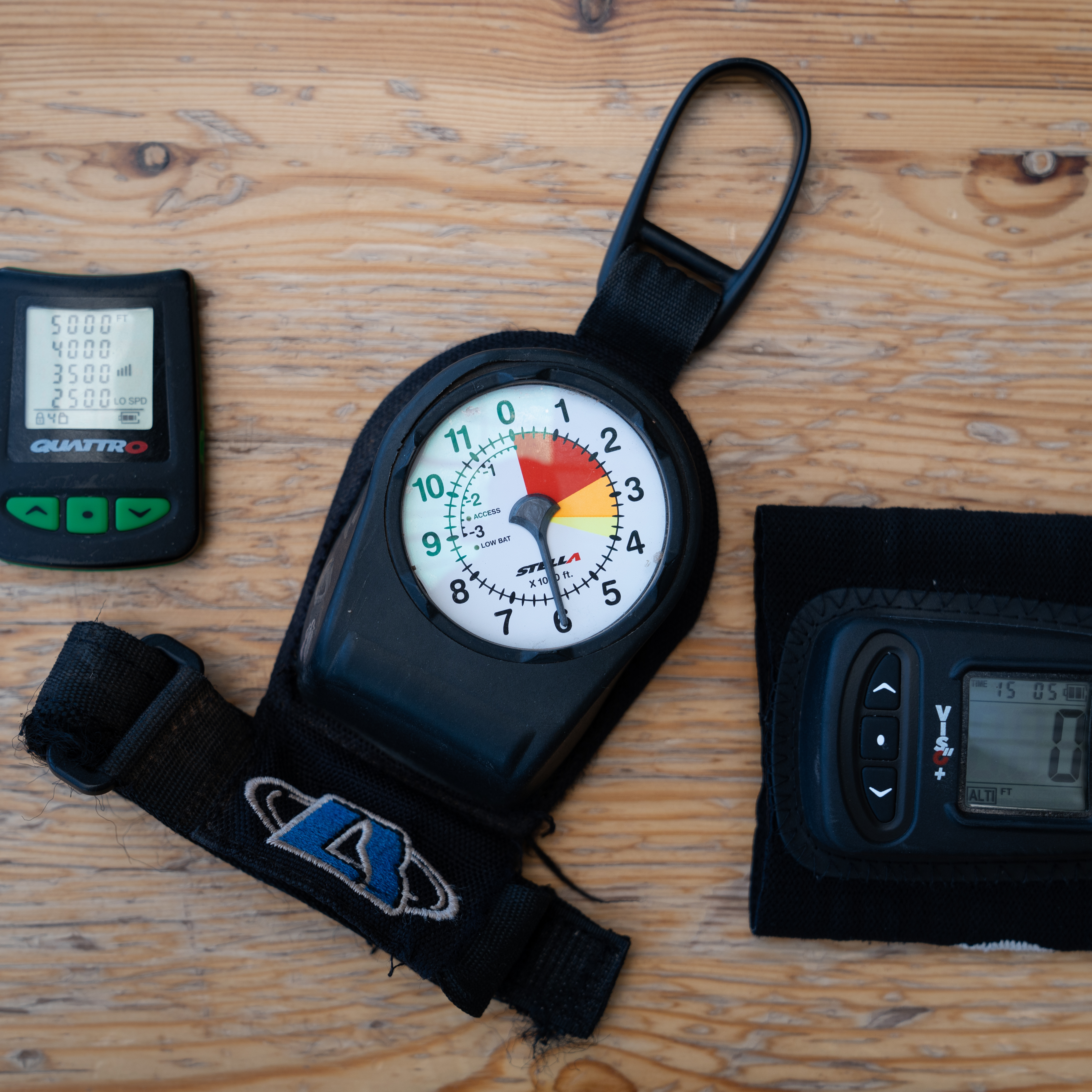
The main function of the altimeter is to provide visual altitude awareness at all times during the jump, and therefore its use is mandatory.
There are two types of visual altimeters: analog and electronic, and they come in various brands.
It is essential to calibrate the altimeter correctly before the jump so that the altitude is zeroed out at ground level. Additionally, you should ensure it has enough battery life, is set to the units of measurement you are familiar with (usually feet or meters), and is properly fastened to your left wrist.
Don’t forget to check your altimeter every 5 seconds (or every 1,000 feet), after completing a maneuver, and whenever you encounter a difficulty.
Audible Altimeter
Unlike the visual altimeter, whose function is to provide altitude information throughout the jump, audible systems or altimeters add an extra layer of safety through alarms that are heard only at specific altitudes.
Although there are different types and brands of audibles, in general, they all offer sets of alarms that help us remember important altitudes during the ascent in the plane, freefall, and canopy flight. Typically, during freefall, the audible alarms are set to indicate separation altitude, deployment altitude, and decision altitude (in case a cutaway is necessary).
In some disciplines, such as free-fly or instructional jumps like Tandem or AFF, it is recommended to use two audibles in addition to the visual altimeter.
It is crucial to check before each jump that the audible is turned on, has the correct altitude settings, and has sufficient battery life. You must also ensure that it is properly placed inside your helmet and will not shift away from your ear during the jump.
Remember, using an audible altimeter is optional, while the visual altimeter is mandatory, as it provides continuous altitude information.
Goggles
Goggles protect your eyes from the airflow during freefall, allowing you to maintain visual contact with your surroundings, altimeter, instructors, or jump partners at all times. Additionally, they protect you from debris when flying under the canopy.
They should be properly adjusted to avoid losing them during freefall, but at the same time, they should be loose enough not to cut off circulation.
If wearing a full-face helmet, goggles are not necessary since you have a visor. However, it’s recommended to use sunglasses to protect against UV rays.
Footwear
Wearing proper footwear is extremely important in our sport, as the right pair can make a difference in preventing injuries during landing.
It is highly recommended to use shoes with flat soles that allow you to slide easily during landing, preventing your foot from catching on the ground until you’ve lost enough speed to run. We also suggest shoes with high ankles to minimize the risk of sprains.
(A couple of examples of flat-soled, high-ankle shoes: Vans Off the Wall for skateboarding, and Nike Jordan models.)
Your shoes should be tightly fastened to avoid losing them during the jump.
Remember, in the event of a hard landing, you should roll to minimize injuries.
Radio
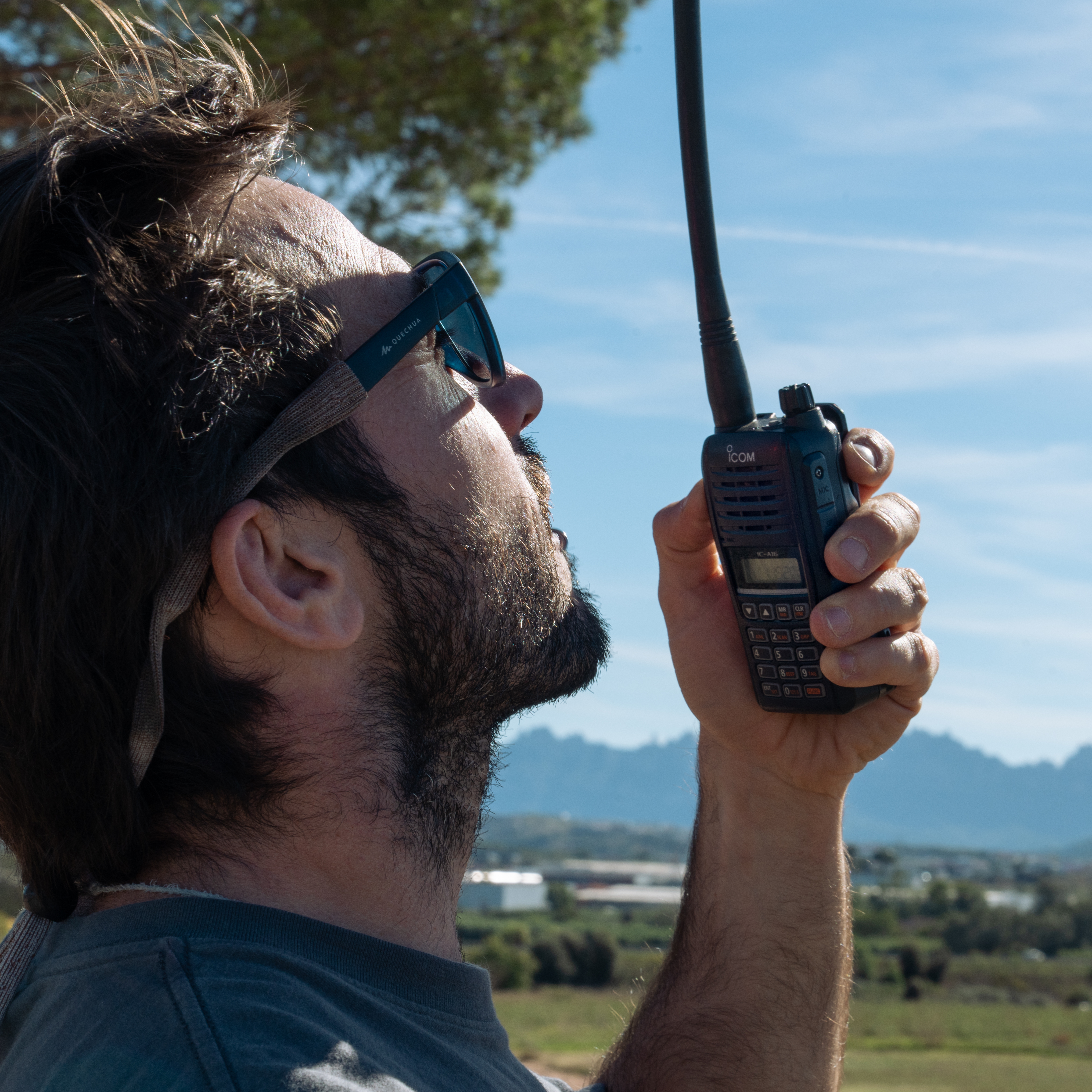
Usually, radios are used as a learning and guiding tool for AFF students and in some canopy courses. It is important to check that it is charged and set to the same frequency as your instructor’s. The radio is only for listening to commands from your instructors.
Don’t forget to check that your accessories are working correctly before gearing up. Once your accessories have been checked and worn in the recommended order, to avoid forgetting any of them, you can proceed to put on your parachute.
References:
- USPA Instructional Rating Manual, 2023-2024 edition. Section C-7: Equipment.
- USPA News, Safety check: Simple rules. Ron Bell, USPA Director of Safety & Training. 2021. Retrieved from the website https://www.uspa.org/about-uspa/uspa-news/safety-check-knowing-your-gear on September 14, 2024.
- Skydiving Gear – A Beginner’s Guide. Brett Newman, February 2021. Retrieved from the website: https://downwardtrend.com.au/blog/skydiving-gear-a-beginners-guide/ on September 14, 2024.