One of the factors that makes our sport very particular compared to most others is that the time we have for practice is limited by the laws of physics associated with movement in a gravitational field (laws of free fall and aerodynamics). This makes our practice, in a way, a race against time.
In addition, each jump requires quite a bit of logistics and time, as we cannot be in free fall or fly our canopy without first reaching a certain altitude, using some type of aircraft.
As a result, we cannot prolong our practice time as much as we would like, unlike other sports.
If we think of our sport in terms of time, like the 90 minutes of a soccer match, we realize that to train that time in free fall, we would need to make around 120 jumps (considering a free fall of 45 seconds). For each of those jumps, we must invest much more time to reach the appropriate height, as the aircraft may take 15 to 20 minutes to get to that altitude.
In our practice, time is precious; therefore, it is essential to make the best use of it to achieve maximum performance in our training. For this reason, it is vital to repetitively prepare all phases of our jump while we are on the ground. In addition to optimizing our learning and performance both in free fall and under canopy, this also allows us to remain alert to react appropriately in case of unforeseen events or emergencies.
Although many people tend to focus solely on training what will happen in free fall, the jump begins when we are called to gear up and ends when we leave our canopy in the packing area. For this reason, we must prepare in detail everything that will occur from before boarding the aircraft to the moment of landing.
Weather Conditions Before Boarding
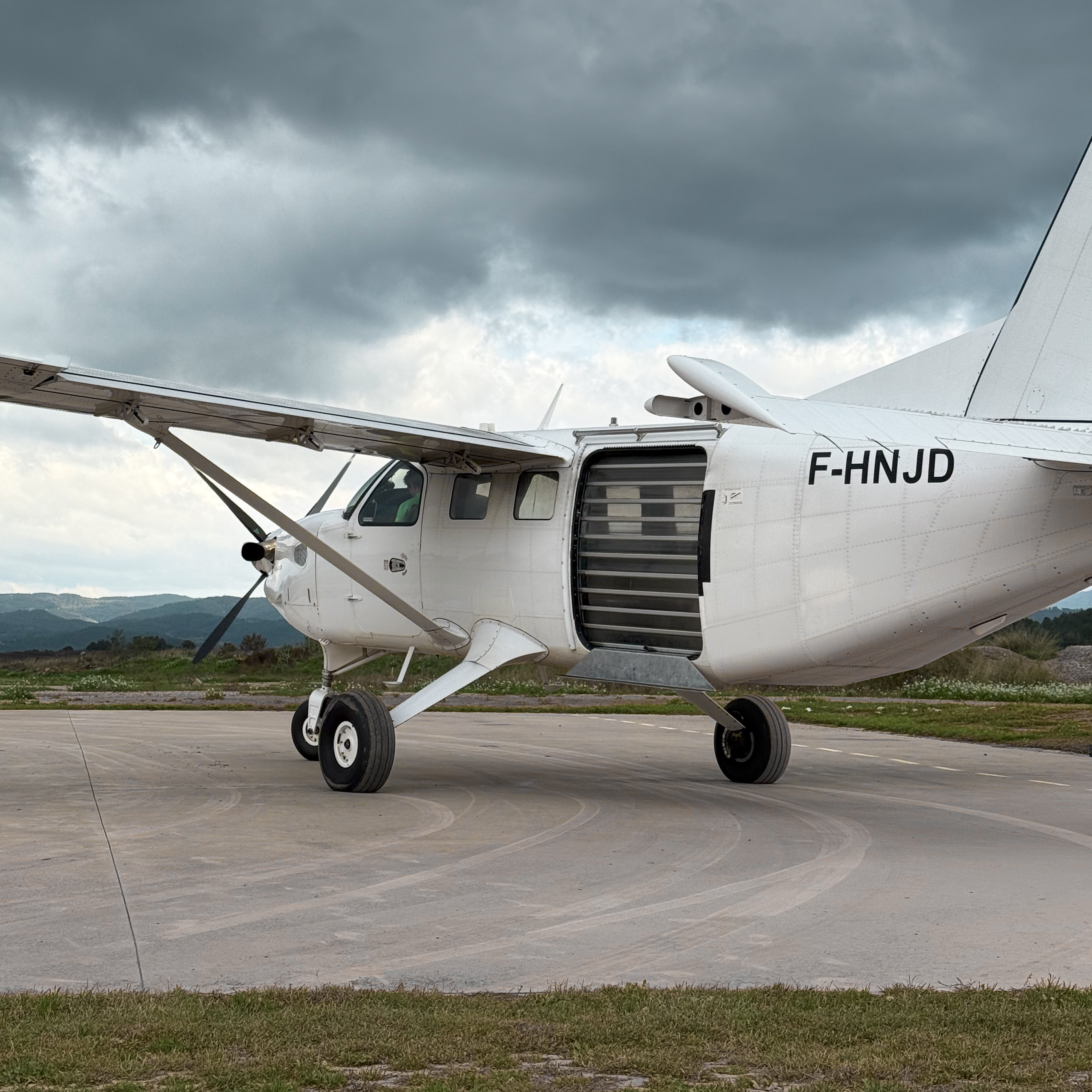
Knowing the direction and intensity of the winds (both on the ground and at altitude), the thickness and height of the clouds, the ambient temperature, and potential sources of turbulence and thermals present in our landing area allows us to have objective criteria when deciding whether it is safe to board the aircraft for the jump.
Additionally, these factors will help us anticipate the landing procedure, minimizing risks associated with weather conditions.
Therefore, before any jump, we must check the wind socks in the landing area, measure wind speed with an anemometer, obtain information about the winds both on the ground and at altitude (we recommend the Windy or Winds Aloft by Mark Schulze apps), recognize the state of the clouds, and verify the tides if we are near the beach.
It is also very useful to observe the landings of the skydivers from the previous jump and gather information from instructors who have just landed to anticipate risks associated with specific conditions and how they may interact with obstacles or hazards present in the landing area.
We must remember that landing in areas different from the planned one is always a possibility. Therefore, it is necessary to review aerial photographs to identify possible alternative zones and be aware of their obstacles.
Respecting Our Own Limits
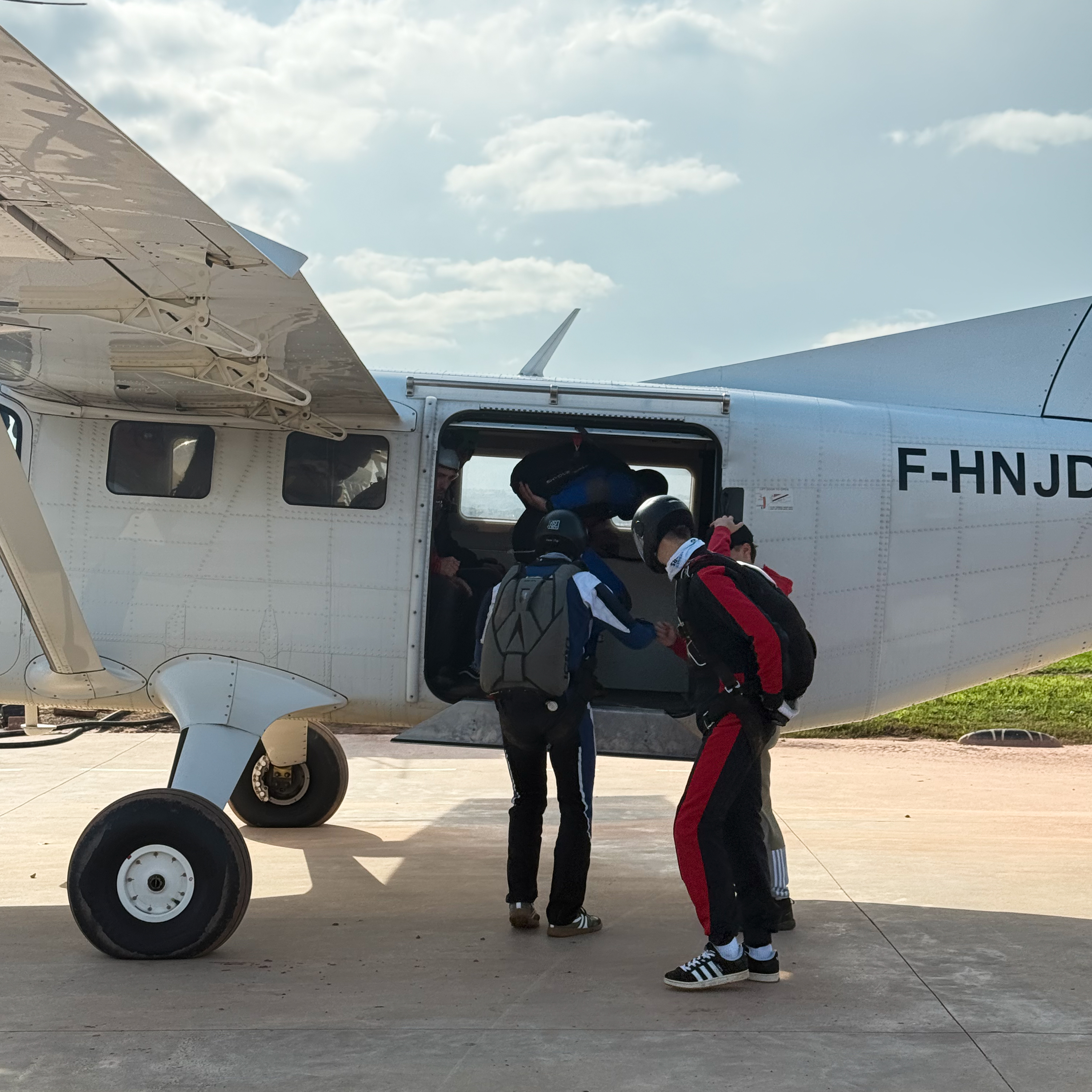
Being clear about our own limits and deciding to respect them is a fundamental part of preparing for our jump. Once we have information about the weather conditions and their associated dangers, we must honestly assess whether we have the necessary experience and technical and psychological capacity to respond to them.
Usually, we tend to overlook our limits when we want to participate in jumps with groups. However, it is harmful and can be dangerous to exceed our capabilities due to following pressure or the excitement of participating in group jumps.
Procedures in the Aircraft
In jump preparation, it is always good to review the appropriate reactions in case of an aircraft emergency, depending on the altitude at which we find ourselves. We should also be clear on how to properly handle the seatbelts and the heights at which the door should remain open or closed.
In addition to emergencies, we must know how we will position ourselves in the aircraft, not only thinking about the safety and performance of our jump but also considering the safety of other groups or skydivers on the flight, depending on their discipline and number of participants.
Position at the Door and Exit
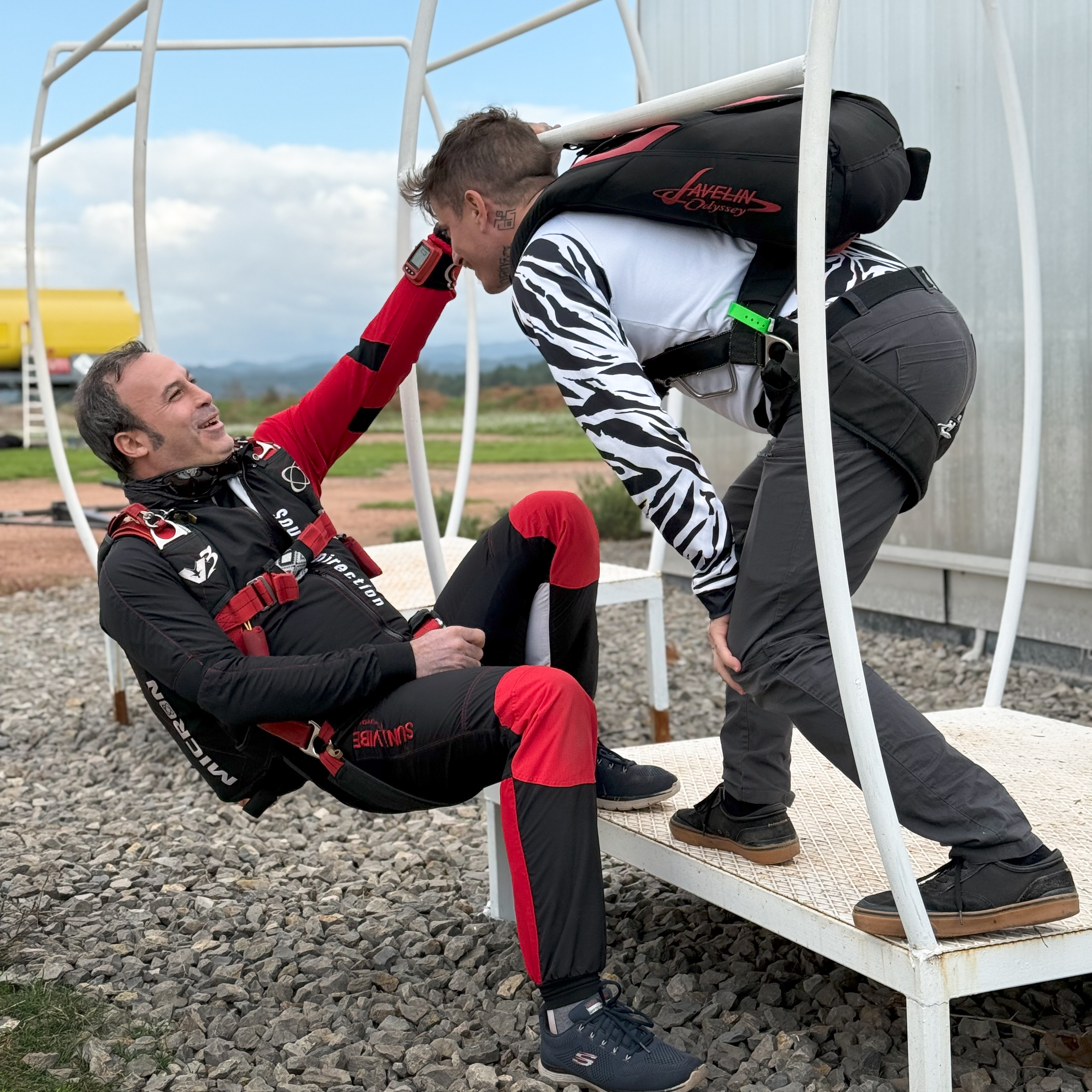
Our position within the aircraft should be determined according to our role during the jump so that we can position ourselves at the door in the most effective and safe way at the moment of exit: the floaters closest to the door, then the base, and finally the divers.
The specific position at the door is defined by our function in the jump, allowing us to optimize performance and maximize safety during the exit and free fall.
It is crucial to practice several times how we will position ourselves at the door, paying special attention to how we approach our position, always protecting the handles and avoiding exposing our container to friction with the door frame or the bodies of other skydivers, as this could cause premature openings.
It is necessary to repeatedly practice the procedure of positioning at the door along with the exit from the aircraft, using a mockup, to ensure a safe and efficient exit.
Free Fall
Visualization and repetition are key for a successful free fall. Practicing the jump on the ground (“dirt diving”) several times with our teammates, to internalize each person’s specific positions and key transitions, increases the chances of success by identifying details about the sequence we will follow during free fall.
It is also important to be clear about the dangerous positions associated with the jump, as the position of the bubble (or wake) changes depending on the discipline we are practicing.
Separation Plan
Establishing a specific altitude and procedure for separation in group jumps or relative work is crucial for the integrity of the participants, minimizing accidents associated with collisions under canopy.
The altitude and separation procedure will depend on the number of participants and the modality practiced. However, the USPA Skydiver Information Manual, in section 6-1 (group jumps), states that the minimum separation altitude must be:
– For groups of fewer than 5 people: at least 1,500 feet above the highest planned opening altitude within the group.
– For groups of more than 6 people: at least 2,000 feet above the highest planned opening altitude within the group.
The separation altitude is strictly non-negotiable and must be rigorously respected.
Opening Altitude
Although the USPA Safety Requirements section of the SIM (section 2) establishes the following minimum container opening altitudes, each jump zone has the authority to increase these heights for the safety of skydivers. Therefore, we must know the regulations of our local area and respect the planned opening altitude to the letter. The lower the altitude, the less time there will be to react to emergency situations.
Landing Plan
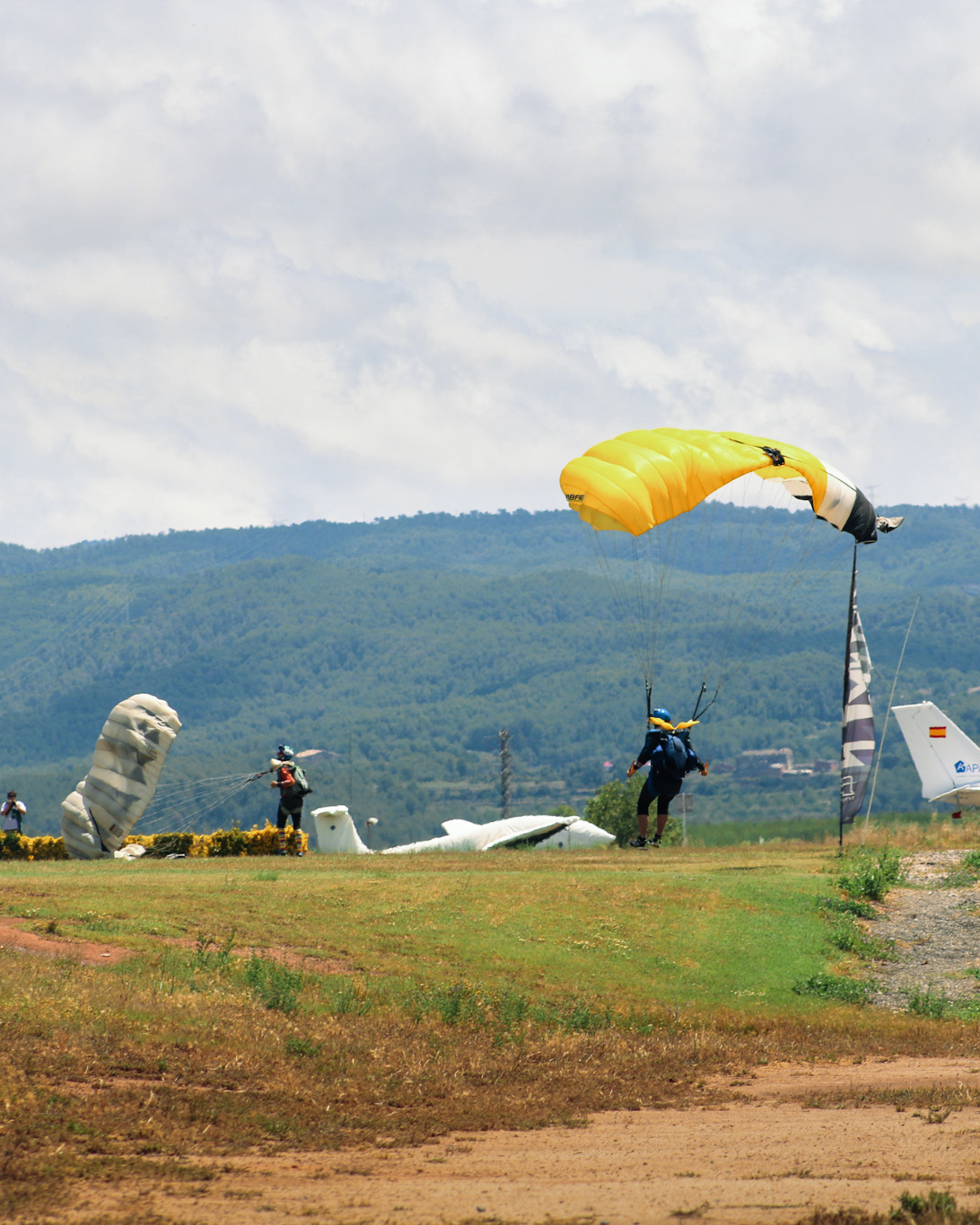
Landing in the planned area without mishaps is what we all desire in every jump. For this reason, it is of fundamental importance to determine the intensity and direction of the wind, both on the ground and at different altitudes, to draw up a navigation plan that involves a waiting area and an appropriate landing pattern according to the weather conditions. Hence, the importance of analyzing weather conditions before the jump, using the recommended tools and apps mentioned earlier.
Since conditions are variable and unpredictable, it is crucial that, as soon as we are under canopy, we begin to repeatedly check our altitude, our position relative to the ground, the traffic of skydivers, and the wind sock on the ground. This will allow us to modify our navigation plan according to the actual conditions.
Decision altitude
Being clear about our decision altitude is vital, as this is the lowest altitude at which we should be clear whether we will land with our main canopy or reserve, as well as the terrain on which we will land.
This criterion should therefore be defined during our pre-jump preparation, being aware of possible alternate landing areas and their obstacles.
Conclusion
Preparing each moment of our jump in detail and without haste not only ensures that we will gain the most learning but, even more importantly, minimizes potential safety risks. For this reason, planning each jump must become part of our habits and routines as skydivers.
References
– USPA, Skydiver Information Manual, 2023 – 2024 edition. Section 2: (Basic Safety Requirements).
– USPA, Skydiver Information Manual, 2023 – 2024 edition. Section 6.1: (Group Jumps and Relative Work).