Our sport is influenced by various external factors that can affect its safety and normal development. Being an outdoor activity, it is completely dependent on weather conditions and their interaction with the specific geographical environment in which it takes place. For example, the presence of winds can cause turbulence in specific areas of the landing area due to certain obstacles.
Furthermore, the risk associated with unpredictable weather factors can increase if we make logistical decisions without properly considering how to minimize the inherent risks associated with the key elements of each jump.
For this reason, we believe it is pertinent to delve into the knowledge related to the different crucial stages for the proper execution of a skydive operation. This knowledge will allow us to form a systematic approach that helps us adequately respond to the external factors of each jump, minimizing the risks associated with our ability to make decisions in situations with variable conditions.
It is important to emphasize that the entire logistical organization of a skydive operation aims to minimize the risks associated with uncontrollable factors. Nothing is left to chance; everything has a purpose.
Therefore, we believe it is essential to present certain technical topics related to the logistics of the operation, so that all skydivers can understand the logic behind the general decisions made by the safety officers in each jump zone.
How to Determine the Aircraft’s Flight Path?
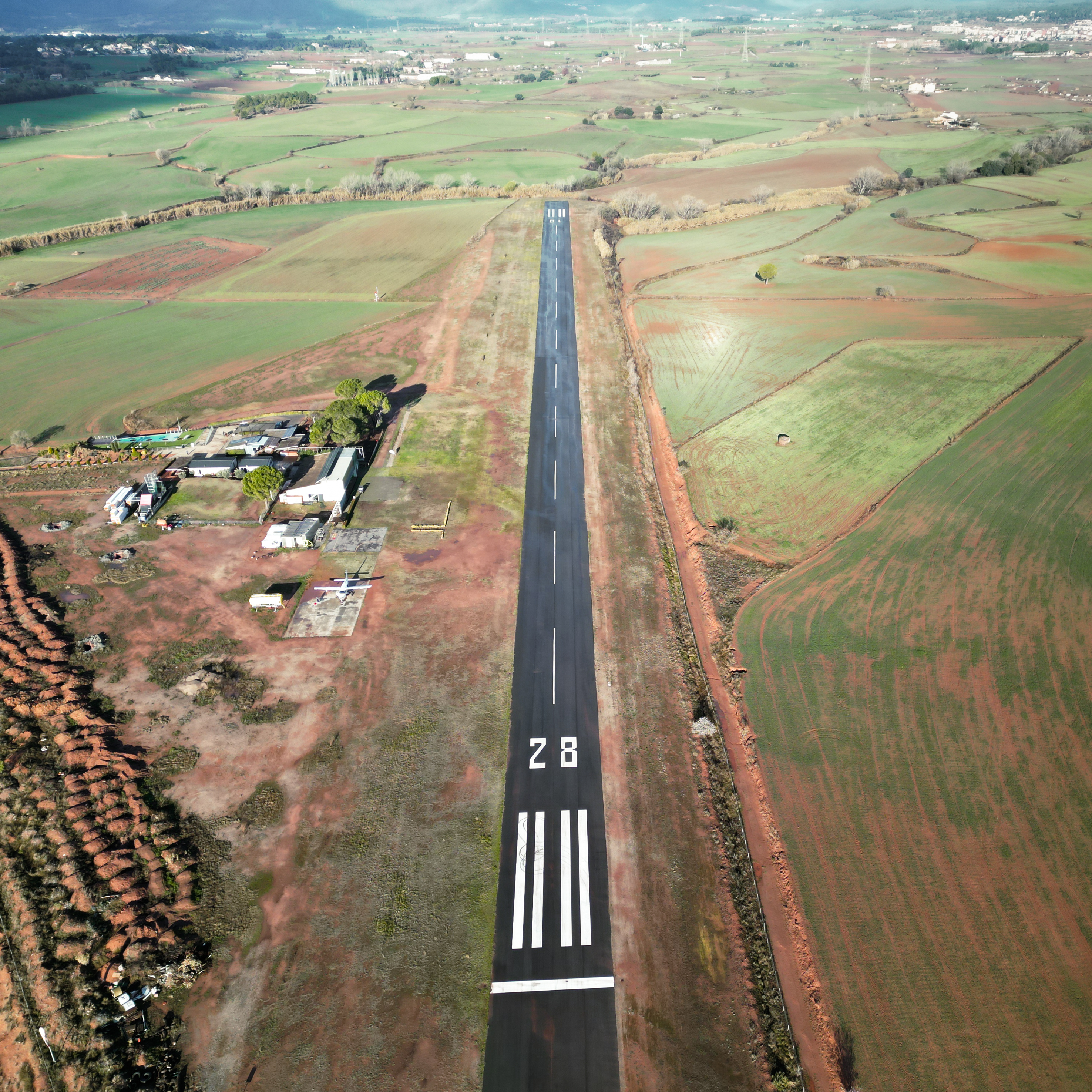
The direction in which the aircraft flies at the moment when skydivers exit is not arbitrary. Ideally, skydivers want to open their canopy and immediately position it against the prevailing relative wind at altitude, so that the drift caused by the wind minimally affects the trajectory of the parachute.
For this reason, the aircraft’s flight path should be against the wind, allowing the first skydivers enough time to orient their canopies into the relative wind and avoid being carried away from the landing area. Additionally, it provides sufficient opportunity for the last groups to fly with the wind if they have drifted away from the landing target.
However, many of you may wonder which wind direction should be used for the aircraft’s flight path, as this may vary with altitude.
A good trick is to calculate the average wind direction, using the available data for every 1,000 feet, to gather enough information that accounts for wind direction variation at different altitudes.
Terrain Elevation
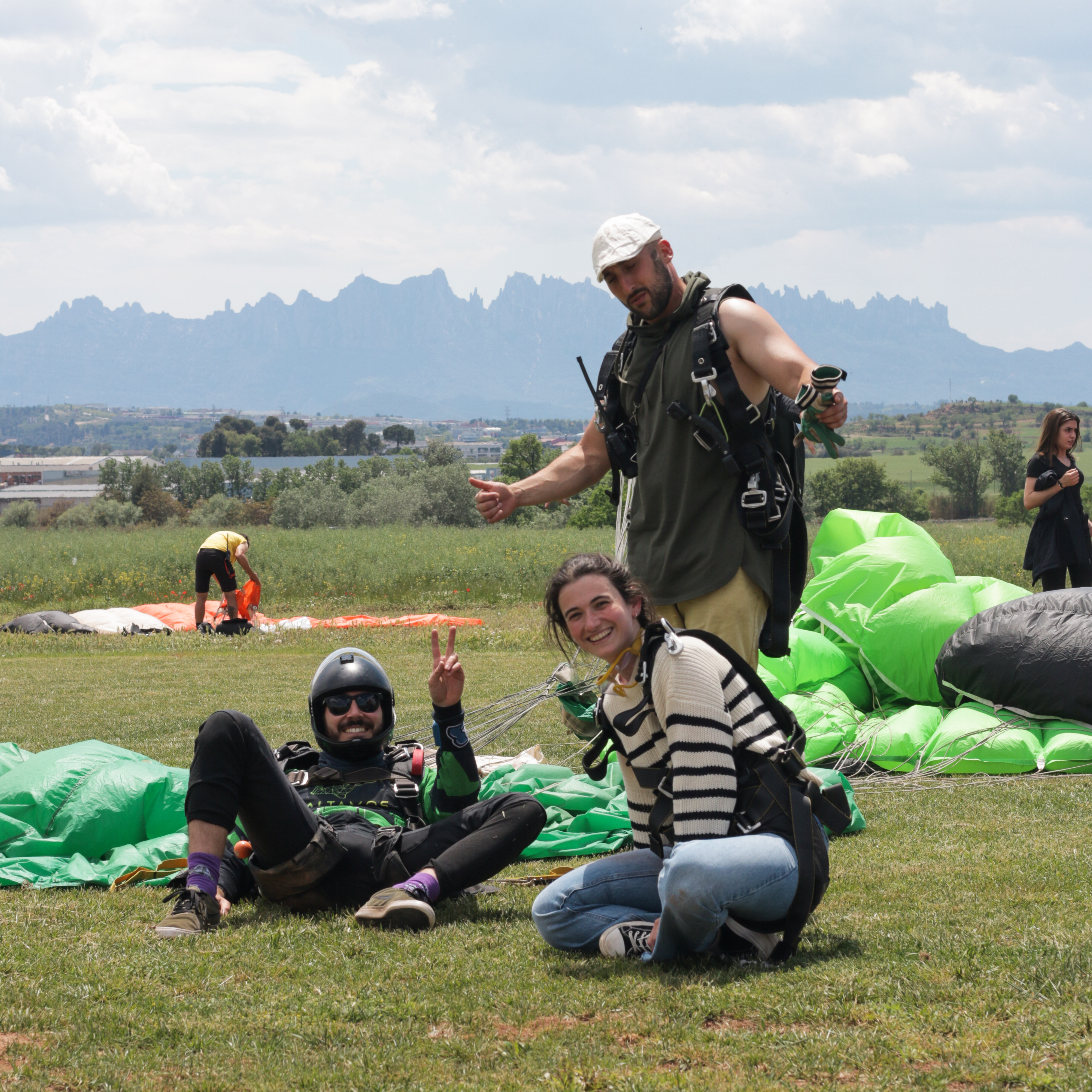
It is crucial to keep in mind that the elevation of the terrain where the landing area is located is not necessarily the elevation above sea level. It is important to know the elevation of our landing area relative to sea level, because the higher the elevation, the lower the atmospheric density will be.
As a result, the same pilot using a canopy of the same size they are used to may experience a higher rate of descent and penetrate more quickly into landing areas with higher elevations due to the decrease in air density associated with reduced atmospheric pressure. For this reason, it is necessary to adjust the landing pattern references and the altitudes at which high-performance turns are made to avoid surprises due to the lower air density.
Also, remember the importance of always calibrating our automatic devices and altimeters, considering that the reference zero should be the main landing area, as in some drop zones, the altitude at which the aircraft takes off may be different from the landing zone’s elevation. Altimeters and automatic devices should always be turned on and calibrated at the landing area.
Orientation of the Runway and Visual Reference Points
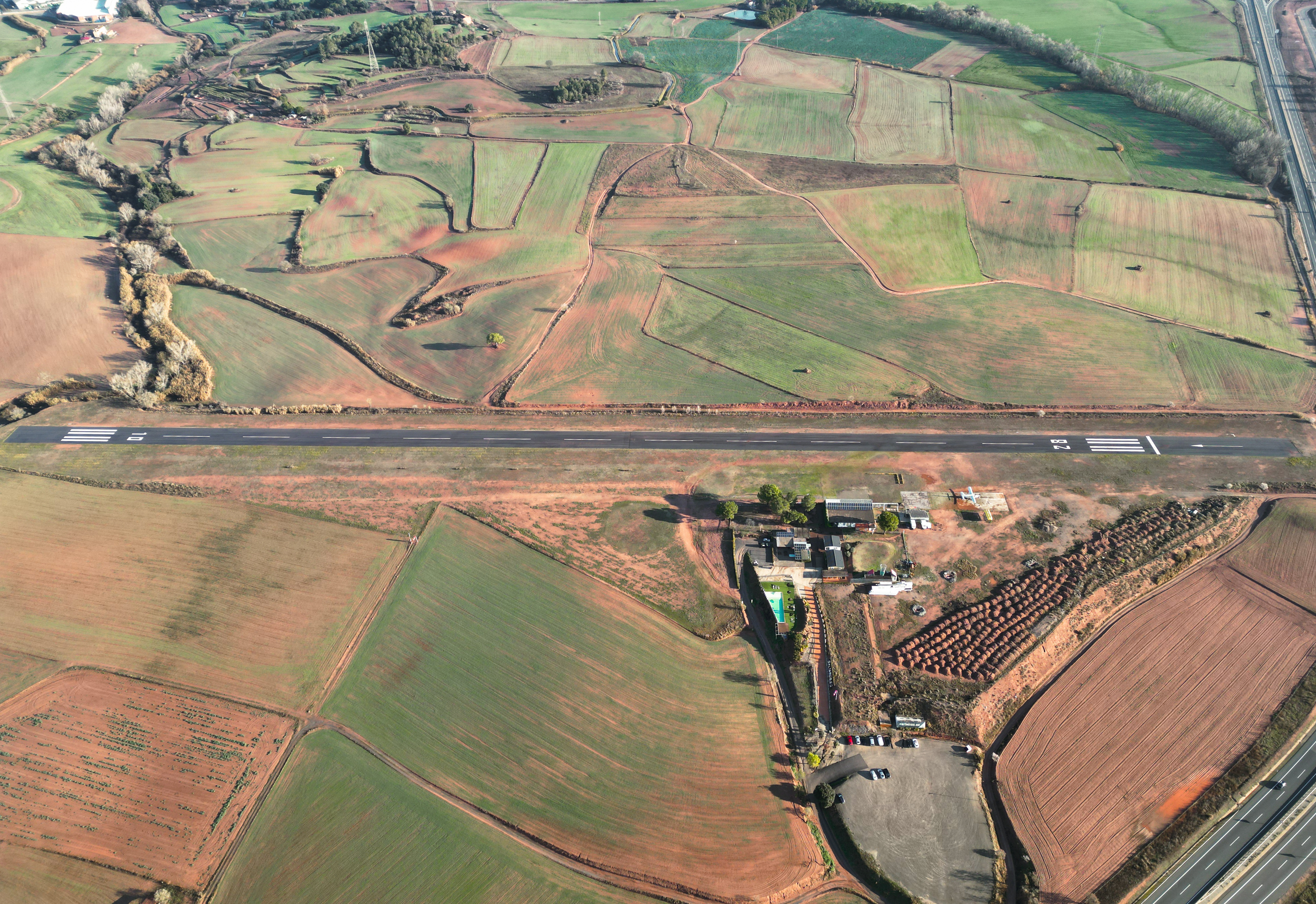
Many skydive operations are conducted within or near airport or airfield facilities, so it is crucial to have a clear understanding of the navigation rules and restrictions, as parachutes and aircraft must not fly in the same airspace.
It is our duty as skydivers to inform ourselves about the flight rules for the drop-zone we are in, understand the dimensions and orientation of the runway, and identify key reference points that allow us to quickly recognize areas that are off-limits to us, so that we can avoid incidents related to airport traffic.
Remember that flying over and landing on the aircraft runway is highly dangerous and prohibited. If we need to walk across the runway, we should always do so in the demarcated area, after ensuring that no aircraft is approaching. If there is any doubt, we should stay off the runway until we are sure there are no aircraft on it or approaching.
Let’s not forget that at airports and municipal airfields, we are nothing more than guests using aviation facilities where several aircraft may be present, whose pilots may not have in-depth knowledge of skydive operations.
Boarding Order and Group Exits from the Aircraft
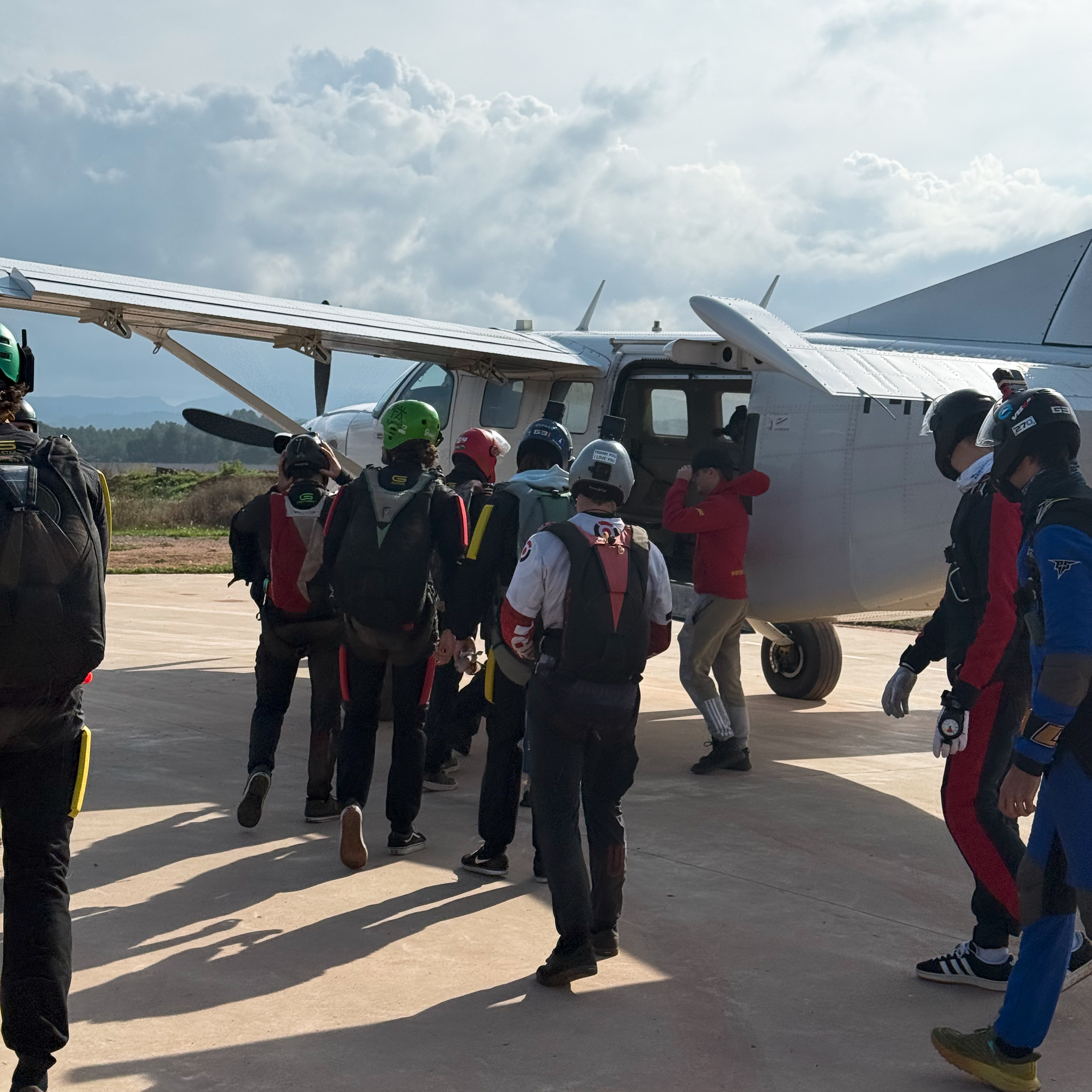
To ensure the maximum horizontal separation between different groups of skydivers on the same flight, it is necessary to respect a logical order of boarding (and exit) the aircraft, ensuring that all groups have a safe flight column, without interference from other groups that could cause collisions.
Groups of skydivers who open at lower altitudes take priority over those who open higher, and larger groups take precedence over smaller ones, as the more numerous ones may experience more drift. Therefore, larger groups should exit first.
The discipline practiced by each group should also be considered, as each discipline has different descent rates.
According to the USPA Skydiver’s Information Manual (SIM, section 5-7), the boarding order for the aircraft is as follows:
– High-pulls and relative work (First to board, last to jump, as they open higher).
– Wingsuits (Take much longer to reach deployment altitude).
– Second horizontal displacement group (if any).
– Tandems.
– AFF students.
– Freefly groups, boarding first from smallest to largest.
– Belly groups, boarding first from smallest to largest.
– Horizontal displacement groups.
– Hop & pops and low jumps (Last to board, first to jump).
Although horizontal displacement groups take longer to fall, in some drop zones, the second horizontal group may be allowed to exit before the tandems and even before the AFF students, as these two typically open higher and horizontal groups move away from the common flight line.
It’s important to note that the exit order is the reverse of the boarding order (the larger groups jump first), so it’s essential to be aware of the activities of all groups before boarding the aircraft.
Separation of Groups in the Flight Line
Just as with the exit order, the waiting time between consecutive groups must ensure maximum horizontal separation between each one to maintain a safe flight column both in freefall and under canopy.
This waiting time depends on the aircraft’s ground-speed. The higher the headwind on the aircraft, the smaller the distance the plane will cover relative to the ground, so the waiting time between groups must be longer to allow for proper separation.
Additionally, when large groups jump, the break-off is higher, occupying a greater horizontal range at the time of separation and deployment, so greater separation is required after a large group has exited the aircraft.
It’s possible that the ground-speed might not be affected by winds at exit altitude, but there may be winds at deployment altitude (4,000 feet) or during canopy flight, landing pattern, or on the ground that must be considered when calculating the separation time.
Conclusion
The external factors we face as skydivers generally come from atmospheric or geographical conditions, primarily the direction and intensity of the wind at different altitudes.
How we choose to interact with these factors, through our knowledge and preparation before the jump, will determine whether our actions amplify or reduce the risks associated with the external conditions.
It is the responsibility of every skydiver to gather as much information as possible about how to react to the different scenarios that may arise, as well as to stay updated on any changes that the safety officers in their jump zones deem necessary to minimize operation risks, always respecting and cooperating with the rules.
For those who wish to expand their understanding of these topics, we have included specific literature references on each subject below.
Bibliographic References:
• USPA, Skydiver Information Manual, 2023-2024 Edition. Section 5-7D: (Exit and flight plan considerations for different disciplines).
• Flight Line Orientation Explained: Taken from the website https:// www.dropzone.com/articles/general/line-of-flight-explained-r841/ on November 20, 2024.
• Separation on Exit Between Skydiving Groups: Taken from the website https://houston.skydivespaceland.com/exit-separationskydiving-groups/ on November 20, 2024.
• Exit Order and Aircraft Boarding: Taken from the website https:// houston.skydivespaceland.com/exit-order-aircraft-boarding/ on November 20, 2024.